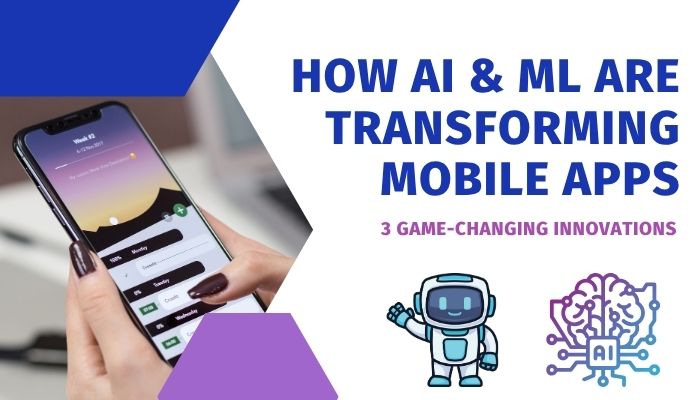
In the era of hyper-personalization and real-time user experiences, Artificial Intelligence (AI) and Machine Learning (ML) have become essential forces in redefining how mobile apps are built, function, and scale. No longer just buzzwords, these technologies are now the core of smart, data-driven applications that predict user needs, automate decisions, and deliver seamless digital experiences.
Whether you’re a product owner or a tech enthusiast, understanding how AI & ML are influencing mobile app development can provide a competitive edge. Here’s a breakdown of three key ways AI and ML are transforming mobile apps today:
Intelligent Personalization: Beyond User Preferences
Today’s users expect more than a static app interface—they want apps that adapt to their behaviour and anticipate their needs. AI makes this possible through real-time data analysis and predictive modelling.
Example:
• Spotify suggests music based on your listening habits.
• E-commerce apps like Amazon personalize product recommendations using ML algorithms.
How it works:
ML models track user interactions (searches, clicks, dwell time) and dynamically update app content, promotions, or product displays to maximize engagement.
Result: Increased user retention, session time, and conversions.
Smart Assistants & Automation: AI-Powered UX
Voice assistants and chatbot integrations are reshaping how users interact with mobile apps. With Natural Language Processing (NLP), AI understands voice/text input and responds naturally, eliminating the need for complex UI navigation.
Example:
• Google Assistant or Siri integration for app voice control.
• Banking apps using AI chatbots for balance checks, transaction history, or FAQs.
How it works:
NLP engines are trained to recognize human speech, parse intent, and trigger actions or retrieve information based on input context.
Benefit: Enhanced accessibility, faster actions, and improved user satisfaction.
Predictive & Real-Time Analytics: Data That Drives Decisions
AI and ML turn raw app data into actionable insights. From churn prediction to fraud detection and real-time analytics, businesses are now using ML models to make data-driven decisions on the fly.
Example:
• Fitness apps predicting workout patterns and suggesting routines.
• Finance apps flagging unusual transactions in real-time.
How it works:
Models analyze historical user behavior, compare it with real-time data, and generate alerts, offers, or preventive actions instantly.
Outcome: Proactive user engagement and business optimization.
What This Means for App Owners & Startups
• Faster growth: AI-driven features improve conversion and retention rates.
• Cost savings: Automation reduces manual tasks (support, recommendations).
• Competitive edge: Apps with smart features stand out in saturated markets.
How to Get Started
If you’re considering integrating AI/ML into your mobile app:
• Start with user behaviour tracking and basic personalization.
• Use plug-and-play tools like Google ML Kit, Dialogflow, or AWS AI Services.
• Gradually evolve toward custom ML models for core functionalities.
AI and ML aren’t just futuristic add-ons—they are transformational tools that enhance how mobile apps learn, adapt, and deliver value. Whether it’s anticipating user intent, automating interactions, or optimizing in real-time, apps powered by AI are shaping the future of digital experiences.
If you’re building a mobile app and want to make it smarter, faster, and more user-centric, AI/ML integration should be at the top of your roadmap.